Working exhibit / energy path for AI racks
The AI data center energy stack, from utility grid to GPU board
The energy problem has two different questions. First: are enough megawatts available at the site? Second: can those megawatts be transformed, protected, distributed, and converted into stable power for dense NVIDIA racks without crashing the workload?
01
Utility grid
Plain English: The source of the electricity.
Think
- Taipower
- Generation mix
- Transmission capacity
- Renewable PPAs
Why it matters
This decides whether a site can get 5 MW, 10 MW, 20 MW, or nothing useful.
Failure mode
The buyer finds land, but the utility cannot allocate enough power on the timeline.
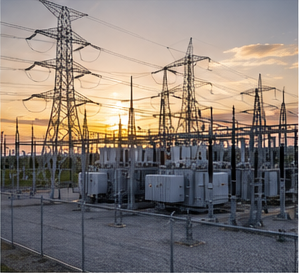
generation + grid
capacity gate
downstream to the site
02
Substation
Plain English: The grid node that brings high-voltage power closer to usable facility power.
Think
- Distance to site
- Available capacity
- New feeder path
- Utility approval
Why it matters
Close substation access can make a site realistic. A far or congested substation can ruin the economics.
Failure mode
There is grid power in the region, but no practical way to deliver it to this parcel.
substation
capacity gate
voltage steps down
03
Transformers
Plain English: The equipment that converts high voltage into lower voltage the facility can use.
Think
- Step-down transformers
- Lead times
- Redundancy
- Spare capacity
Why it matters
Transformers are the bridge between utility-scale electricity and facility-scale electricity.
Failure mode
The site has a theoretical power path, but the transformer lead time blows up the deployment date.
transformer
delivery bottleneck
controlled inside the facility
04
Switchgear
Plain English: Giant industrial circuit breakers that control and route electricity safely.
Think
- Breakers
- Protection relays
- Isolation
- Safe maintenance
Why it matters
At AI power densities, a fault is not a small inconvenience. It is a safety, uptime, and equipment risk.
Failure mode
The electrical room cannot safely route the power density the racks demand.
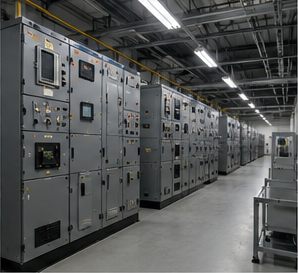
switchgear
delivery bottleneck
stabilized and buffered
05
UPS
Plain English: Battery-backed systems that keep power stable during outages or transitions.
Think
- Batteries
- Inverters
- Ride-through time
- Generator handoff
Why it matters
Even tiny interruptions can crash AI training jobs and waste expensive GPU time.
Failure mode
The grid blips, generator transition is messy, and the cluster drops a job.
UPS batteries
reliability gate
distributed to rows
06
PDUs
Plain English: Power Distribution Units that send electricity to rows of racks.
Think
- Row-level distribution
- Monitoring
- Breaker panels
- Load balancing
Why it matters
PDUs translate facility power into rack-row power with measurement, protection, and control.
Failure mode
The room has total MW, but cannot distribute it cleanly across the rack layout.
PDU
delivery bottleneck
final high-current rack feed
07
Busbars and rack power shelves
Plain English: Final high-current delivery into AI racks.
Think
- Copper busbars
- Rack power shelves
- High-current connectors
- Thermal monitoring
Why it matters
This is where abstract MW becomes very real current entering a dense rack.
Failure mode
Connectors, busbars, or shelves cannot handle the amperage or heat safely.
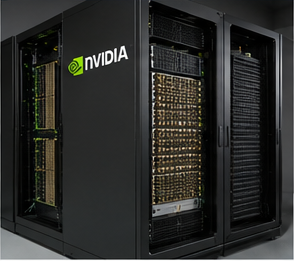
rack feed
delivery bottleneck
converted on the board
08
GPU boards
Plain English: Voltage regulators turn rack power into the exact levels GPUs need.
Think
- VRMs
- Power stages
- Telemetry
- Thermal safety
Why it matters
GPUs need precise, stable power at massive current. Bad conversion creates crashes, heat, or hardware failure.
Failure mode
The facility works, but board-level power instability causes throttling, failures, or reliability problems.
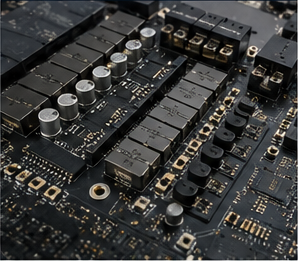
GPU board power
final conversion
The simple version
Power is not one thing. It is allocation, transformation, protection, distribution, and board-level conversion.
Why this matters to the wedge
- 1 It makes site scoring realDo not ask only "does the site have power?" Ask where in the chain the power is confirmed.
- 2 It exposes fake supplyA landlord may have land, but no substation path, transformer, switchgear, or AI-rack-ready distribution.
- 3 It gives Lawrence a buyer-facing checklistThe buyer wants a credible power path, not vague assurances about Taiwan relationships.